SPECIAL SESSION #14
Advanced Measurement Systems and Data-Driven Solutions for Sustainable and Climate-Resilient Livestock Systems
ORGANIZED BY
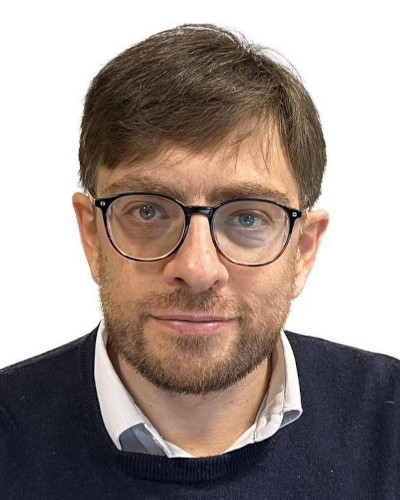 Francesco Bonavolontà
Francesco Bonavolontà
University of Naples Federico II, DIETI, Italy
 Ester Scotto di Perta
Ester Scotto di Perta
University of Naples Federico II, DAS, Italy
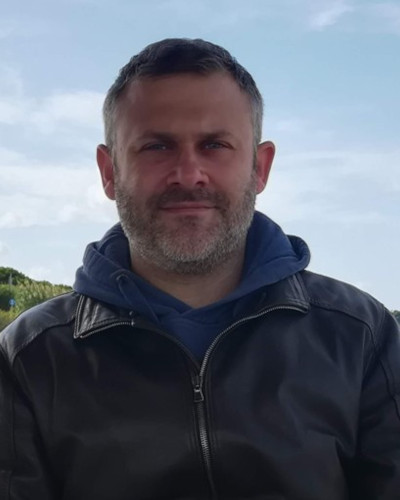 Alberto Finzi
Alberto Finzi
University of Milan, DiSAA, Italy
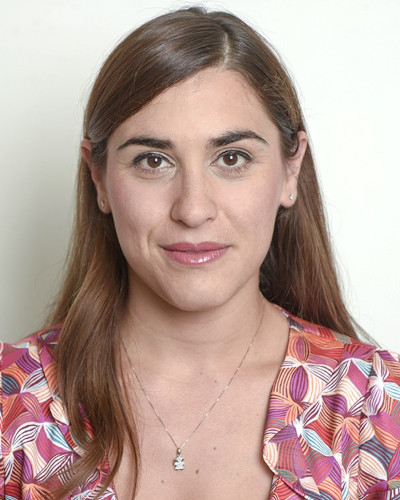 Provvidenza Rita D'Urso
Provvidenza Rita D'Urso
University of Catania, Di3A, Italy
SPECIAL SESSION DESCRIPTION
This Special Session focuses on the role of advanced measurement systems and data-driven approaches in improving sustainable productivity and mitigating environmental impacts in livestock systems. In the face of climate change, increasing environmental pressures and the need for resilient agri-food production chains, reliable and integrated measurements are a key enabling factor for effective livestock management and informed decision-making.
Contributions addressing the development, deployment and validation of measurement technologies for livestock systems are welcomed, particularly those focusing on the continuous monitoring of gas concentrations and emissions (NH3 and GHGs). This includes integrated solutions for environmental and microclimatic monitoring, animal health and welfare assessment, feeding strategies and farm buildings. Particular attention is given to IoT-based sensing solutions and smart monitoring architectures capable of managing complex, heterogeneous and high-frequency data.
Measured data provide the foundation for machine learning, artificial intelligence, digital twins and real-time decision support systems, supporting adaptive livestock management, emission mitigation and resource optimisation. This Special Session highlights how robust and metrologically sound measurements can bridge experimental research and practical applications, contributing to more resilient, efficient and sustainable livestock systems.
TOPICS
The main topics of interest of the Special Session include, but are not limited to, the following:
- Advanced measurement systems for environmental and microclimatic monitoring in livestock facilities;
- Monitoring of barn gas emissions and air quality: Integrated IoT sensor networks for greenhouse gases (CH4, CO2, N2O) and ammonia (NH3) concentrations;
- Validation and metrological characterization of sensors and measurement methods for quantifying ammonia and GHG emissions in complex farm environments;
- Comparative analysis of sensing technologies: Performance evaluation of low-cost sensors versus reference instrumentation (e.g., photoacoustic spectroscopy, chemiluminescence);
- IoT sensor networks for monitoring air quality, greenhouse gas emissions (e.g. CH₄, NH₃, CO₂), thermal comfort and energy consumption;
- Low-power and long-range sensing solutions (e.g. LoRaWAN) for smart livestock applications;
- Measurement technologies for animal health, welfare and behaviour assessment;
- Sensor-based identification and characterisation of climate-resilient animals;
- Measurement approaches for assessing the effect of feeding strategies on emission reduction;
- Data recording, data quality, traceability and uncertainty in livestock measurements;
- Machine learning and AI models driven by measured data for prediction and decision support;
- Real-time decision support systems for livestock management;
- Digital twins of livestock systems based on sensor data.
ABOUT THE ORGANIZERS
Francesco Bonavolontà is an Associate Professor of Electrical and Electronic Measurements at the University of Naples Federico II. After completing his PhD in Electrical Engineering, he developed an extensive research activity on advanced measurement systems, IoT sensor networks, and solutions for Industry 4.0, Precision Livestock Farming, and agri-food sustainability. He is the author of more than 100 international publications and serves as Associate Editor for journals such as Scientific Reports (Nature) and Measurement: Sensors (Elsevier). He has coordinated major projects within PNRR, PRIN, and industrial frameworks, collaborating with national and international research institutions and industrial partners. He is also co-inventor of the patent System and Method for Capturing Wild Boars (2023).
Ester Scotto di Perta is a Researcher in Rural Building and Landscape Planning (AGR/10) at the Department of Agricultural Sciences, University of Naples Federico II. She currently teaches Livestock Structures and Sustainable Management of Livestock Effluents in the Master’s degree program in Agricultural Sciences and Technologies. Her current research is integrated into the National Research Centre for Agricultural Technologies (Agritech), which is funded by the European Union’s NextGenerationEU initiative. She focuses on optimising livestock waste management systems to mitigate atmospheric ammonia (NH3) and greenhouse gas (GHG) emissions during critical stages, such as storage and field application. Her expertise includes the assessment of emission dynamics and the development of advanced valorisation strategies. Her work specifically explores ammonia stripping for nitrogen recovery and anaerobic digestion processes aimed at producing renewable energy and high-value biochemicals, including methane, hydrogen, and volatile fatty acids (VFAs).
In 2023, she obtained the National Scientific Qualification (ASN) as an Associate Professor in Agricultural, Forestry, and Biosystems Engineering (07/C1). She graduated with honours with a Master’s degree in Environmental Engineering from the University of Naples Federico II and earned her PhD with honours in Plant and Animal Production Sciences from the University of Tuscia. Her doctoral research specialized in ammonia emission dynamics and mitigation technologies in Mediterranean climates.
Since 2015, she has authored 37 scientific publications (Scopus H-index: 11; 400 citations) and has been a speaker at numerous national and international conferences. She is a member of the Italian Association of Agricultural Engineering (AIIA) and the COST Action CA20127 (WIRE), which focuses on waste biorefinery technologies.
Alberto Finzi is a professor in the Department of Agricultural and Environmental Sciences at the University of Milan.
His research focuses on studying livestock manure management systems and the impact of livestock housing management on the environment and animal welfare. Specific investigations focus on developing innovative techniques for detecting emissions and evaluating mitigation strategies to reduce ammonia and greenhouse gas (GHG) emissions, thereby improving the sustainability of livestock activities.
Provvidenza Rita D’Urso is an Assistant Professor of Rural Buildings and Agro-Forest Land Planning at the Department of Agriculture, Food and Environment (Di3A), University of Catania. She is both an engineer and an agronomist. She graduated cum laude in both Building Engineering and Architecture and in Agricultural Sciences. She holds an International PhD cum laude in Agricultural, Food and Environmental Sciences. Her research activity focuses on the Precision Livestock Farming to improve the sustainability of livestock production systems, with particular attention to livestock building design, animal welfare, and the monitoring and modelling of ammonia, particulate matter and greenhouse gas emissions. Her work also includes analyses at territorial scale using Geographic Information Systems and the application of forecasting models to evaluate the impact of climate change on crops and their spatial distribution. She is member of the Italian Association of Agricultural Engineering (AIIA).