SPECIAL SESSION #01
Advances in sensor-based monitoring and Assessment of livestock behaviour and welfare
ORGANIZED BY
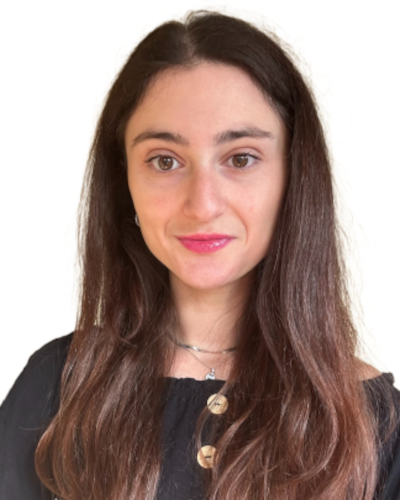 Martina Lamanna
Martina Lamanna
University of Bologna, Italy
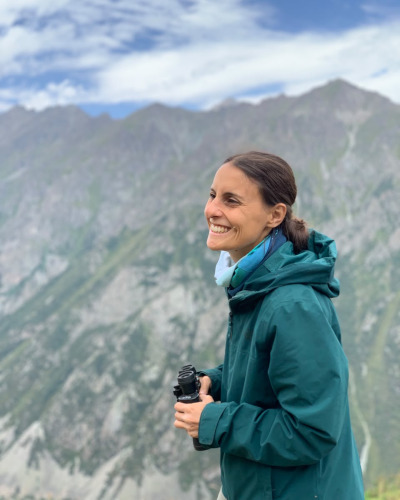 Giovanna Marliani
Giovanna Marliani
University of Bologna, Italy
 Bernadette O’Brien
Bernadette O’Brien
Teagasc Animal and Grassland Research and Innovation Centre, Moorepark
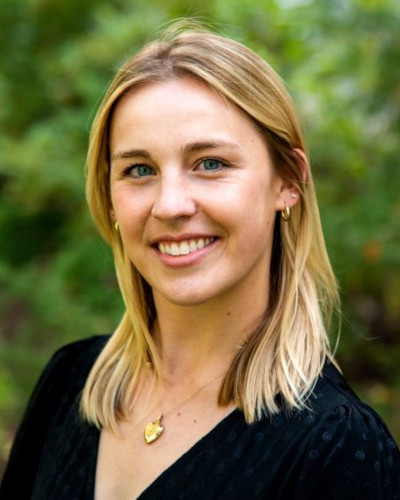 Emily Sitko
Emily Sitko
Teagasc Animal and Grassland Research and Innovation Centre, Moorepark
SPECIAL SESSION DESCRIPTION
The increasing availability of wearable, environmental, and remote-sensing technologies is creating new opportunities to measure and assess livestock behaviour continuously under real farming conditions. Accelerometers, inertial measurement units, positioning and proximity systems, and computer vision can provide information on feeding, grazing, rumination, drinking, locomotion, resting, social interactions, group dynamics, and reproductive activity. These technologies can also support the identification of behavioural changes associated with health, welfare, and stress. However, converting sensor outputs into biologically meaningful and practically useful indicators remains a major scientific and technical challenge.
This Special Session will focus on the development, validation, and application of sensor-based methods for measuring livestock behaviour and welfare. Particular attention will be given to measurement principles, calibration, data quality and uncertainty, the selection of appropriate reference standards, and the validation of behavioural classification systems. Contributions examining sensor usability, animal wearability, battery life, durability, and implementation under commercial farming conditions will also be welcome.
The session will address the integration of data from wearable devices, computer vision systems, environmental sensors, and farm-management records. This includes multisensor approaches combining behavioural, physiological, environmental, and production data. Studies applying machine learning and artificial intelligence to behavioural classification, anomaly detection, early-warning systems, and decision support are encouraged. Other relevant aspects include algorithm interpretability, real-time monitoring, edge computing, data transmission, interoperability, and the robustness and transferability of monitoring systems across animals, breeds, farms, housing conditions, grazing systems, and environmental contexts.
The session is intended to bring together researchers from animal science, veterinary medicine, ethology, engineering, data science, and Precision Livestock Farming. Its overall aim is to discuss how sensor-generated data can be translated into reliable information for health surveillance, welfare assessment, and reproductive and nutritional management. Both methodological studies and practical applications tested in experimental or commercial settings will be considered, together with work addressing the ethical use, ownership, privacy, and governance of livestock data.
ABOUT THE ORGANIZERS
Dr. Martina Lamanna is a veterinarian, a PhD candidate at the Department of Veterinary Medical Sciences, University of Bologna, and a resident of the European College of Animal Welfare and Behavioural Medicine (ECAWBM). Her research in Precision Livestock Farming and applied ethology focuses on validating wearable and multisensor technologies to monitor livestock behaviour and welfare. Her work centres on feeding and grazing behaviour, activity patterns, and social interactions, using data analysis and artificial intelligence to improve behavioural classification. She also supervises student research projects in animal behaviour, nutrition, management, and welfare. Beyond her research, she is interested in the social dimensions of veterinary practice and science communication. She has authored numerous peer-reviewed publications and presented her work at national and international conferences.
Dr. Giovanna Marliani graduated in Veterinary Medicine and completed a PhD in Applied Ethology and Animal Welfare and a School of Specialization in animal health, breeding, and productions. A key aspect of her research is the adoption of a multidisciplinary approach, integrating expertise in ethology with knowledge of endocrinology and physiology to gain comprehensive insights into animal behaviour and welfare. She has authored numerous peer-reviewed publications in the fields of animal behaviour and welfare and has contributed to several national and international scientific multidisciplinary projects. In the academic year 2026/2027, she is Adjunct Professor of Veterinary Ethology at the University of Bologna within the Single-Cycle Master's Degree in Veterinary Medicine.
Dr. Bernadette O’Brien is a Principal Research Scientist at Teagasc Animal and Grassland Research and Innovation Centre, Moorepark, Ireland. She has worked across the areas of precision sensing and monitoring techniques for animals, technologies for grass management and automatic milking as well as labour efficiencies on dairy farms. Her current work focuses on the role and suitability of virtual fencing in Irish dairy farm systems. She has been successful in securing significant EU and National research funding, as lead and co-investigator and has published widely. Bernadette has also supervised students to PhD level and fulfills a role in lecturing to university students.
Dr. Emily Sitko is a Research Officer in precision dairy management at Teagasc Animal and Grassland Research and Innovation Centre, Moorepark, Ireland. She holds a B.S. and Ph.D. in Animal Science from Cornell University and has research experience across both U.S. confinement and Irish pasture-based dairy systems. Her expertise spans animal science, reproductive physiology, epidemiology, and data analytics. Her current research programme at Teagasc focuses on translating complex biological and sensor-derived data into practical applications and decision-support tools, with the aim of improving the sustainability and management of dairy production systems. She has authored numerous peer-reviewed publications in the areas of dairy cattle reproduction, health, and precision dairy management. She also contributes to teaching as a guest lecturer at University College Cork and University College Dublin.