SPECIAL SESSION #10
Monitoring Livestock Environments: From Reliable Measurements to Animal Health and Welfare
ORGANIZED BY
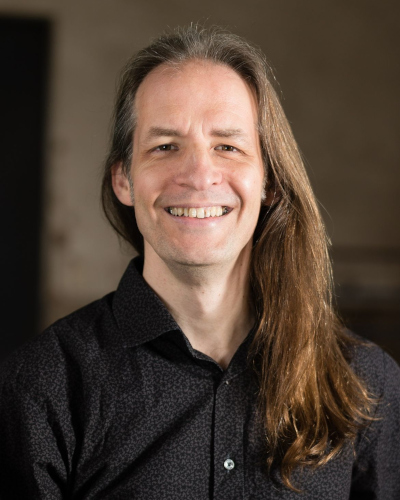 Michael Kazda
Thünen Institute of Agricultural Technology
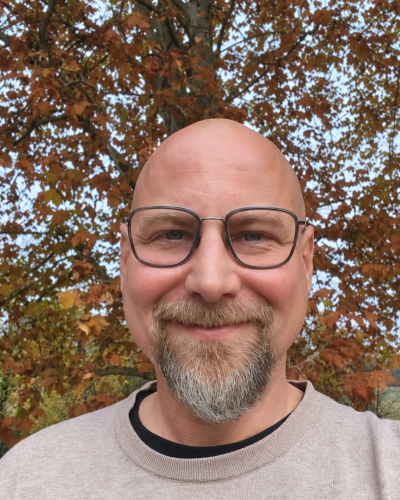 David Janke
Leibniz Institute for Agricultural Engineering and Bioeconomy (ATB)
SPECIAL SESSION DESCRIPTION
Environmental conditions in livestock housing influence animal health and welfare, yet their assessment depends on reliable measurements under challenging field conditions. This Special Session brings together researchers from veterinary medicine, animal science, agricultural engineering and measurement science to discuss how environmental sensing, data integration and modelling can support the characterization of livestock housing conditions and the assessment of their potential effects on animals.
Contributions are invited on measuring air quality, barn climate, micro environments, ventilation, gaseous emissions and other physical or chemical environmental parameters; evaluating sensor performance, calibration, long-term stability and measurement uncertainty; and designing monitoring strategies that capture spatial and temporal variation in livestock buildings. Studies addressing sensor placement, reference measurements, the representativeness of point measurements and exposure assessment are particularly welcome.
The session also welcomes studies combining environmental measurements with clinical findings, physiological responses, behaviour or animal welfare indicators. Data integration and modelling approaches, including computational fluid dynamics (CFD), physics-based models and AI, are relevant where they help interpret measurements, reconstruct spatial conditions or assess associations between environmental exposure and animal responses.
The aim is to exchange practical experience and methodological advances, identify limitations of current monitoring approaches and explore how reliable and validated environmental data and models can support veterinary research, livestock management and the improvement in housing conditions.
ABOUT THE ORGANIZERS
Dr.-Ing. Michael Kazda is a senior scientist and head of the research group Sensor and Systems Engineering at the Thünen Institute of Agricultural Technology in Braunschweig, Germany. He holds a PhD in Electrical Engineering.
Before joining the Thünen Institute in 2024, he worked for 15 years at the Physikalisch-Technische Bundesanstalt (PTB), Germany's National Metrology Institute, where his research focused on precision measurements, measurement uncertainty and metrological traceability. Previously, he worked as a development engineer for gas detection instruments at Dräger Safety. He also has extensive experience in the assessment of calibration laboratories according to ISO/IEC 17025.
His current research focuses on sensor characterization, validation and measurement uncertainty in agricultural applications, particularly environmental monitoring and gaseous emission measurements in livestock buildings. His work includes laboratory and field investigations of electrochemical ammonia sensors, their long-term stability and performance under practical operating conditions, as well as the development and evaluation of sensor systems for monitoring environmental conditions in naturally ventilated livestock buildings.
A particular emphasis is placed on ensuring reliable environmental measurements under real-world farming conditions. He is also interested in combining environmental sensor data with animal-related information to assess livestock housing conditions and support climate control strategies aimed at improving animal health and welfare.
Dr.-Ing. David Janke is a senior scientist and research group leader at the Leibniz Institute for Agricultural Engineering and Bioeconomy (ATB) in Potsdam, Germany. He holds a PhD in Mechanical Engineering and leads ATB's Emissions Laboratory for Livestock Production and atmospheric boundary layer wind tunnel.
His research focuses on the measurement and modelling of environmental conditions, ventilation and gaseous emissions in livestock buildings, particularly naturally ventilated housing systems. His work combines experimental investigations, long-term on-farm monitoring, sensor networks and computational fluid dynamics (CFD).
A particular focus of his current research is the integration of sensor measurements with physics-based and data-driven models to improve environmental monitoring, emission estimation and the assessment of livestock housing conditions.